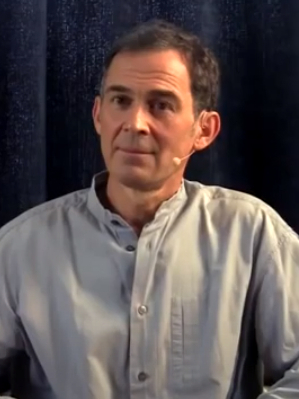
The Essence of Being and Knowing
Rupert Spira's profound assertion, "What is, is. What knows what is, is also what is," invites us to explore the intricate relationship between existence and consciousness. At its core, this statement emphasizes the unity of being and knowing, suggesting that our awareness of reality is not separate from the reality itself. This understanding is crucial, as it challenges the dualistic perception that often permeates our thoughts and experiences, urging us to recognize the interconnectedness of all that exists.
In a world rife with distractions and divisions, Spira's words serve as a gentle reminder of the simplicity and profundity of existence. By acknowledging that what we perceive and the consciousness that perceives it are one and the same, we open ourselves to a deeper understanding of our place in the universe. This realization can transform our approach to life, fostering a sense of unity and peace that transcends the chaos of daily existence.
The image / the metaphor
The quote presents a striking image of unity through its use of the verbs "is" and "knows." The first part, "What is, is," establishes a firm foundation in the present moment, affirming the reality of existence without embellishment or interpretation. The second part, "What knows what is, is also what is," introduces the concept of consciousness as an integral aspect of that reality, suggesting that awareness is not an external observer but rather an intrinsic part of the fabric of existence itself.
Diving deeper into the metaphor, we can see that Spira is inviting us to dissolve the boundaries we often create between ourselves and the world around us. The act of knowing is not a separate function but a natural expression of being. This interconnectedness implies that our understanding of reality is not merely a cognitive exercise but a lived experience that encompasses our entire being. In this sense, the quote becomes a call to embrace the wholeness of existence, where knowing and being are inseparable.
In the speaker's tradition
Rupert Spira's insights are deeply rooted in the non-dual tradition, which emphasizes the fundamental unity of all existence. Concepts such as *advaita* (non-duality) and *sunyata* (emptiness) resonate with his teachings, highlighting the idea that the distinctions we perceive in the world are ultimately illusory. In this context, the notion of *kenosis*, or self-emptying, becomes relevant as it encourages us to let go of our preconceived notions of self and other, allowing us to experience the oneness that Spira articulates.
In his work, Spira often draws upon the teachings of Advaita Vedanta, particularly the writings of sages like Ramana Maharshi and Nisargadatta Maharaj. For instance, Maharshi's famous inquiry, "Who am I?" aligns with Spira's exploration of consciousness, urging seekers to look beyond the surface of their thoughts and identities to discover the underlying essence of being. This shared lineage underscores the timeless nature of the wisdom being conveyed, inviting us to engage with these profound truths in our own lives.
Living the teaching
Consider a modern scenario where this teaching can be applied: a moment of frustration while navigating a busy city street. In such instances, we often find ourselves caught in a whirlwind of thoughts and emotions, perceiving the chaos as separate from our own experience. By embracing Spira's teaching, we can pause and recognize that the very awareness of our frustration is part of the same reality that encompasses the bustling street. This shift in perspective allows us to respond with greater equanimity, fostering a sense of peace amidst the external turmoil.
Another application of this teaching might arise in the context of a challenging relationship. When faced with conflict, it is easy to view the other person as an adversary, reinforcing the illusion of separation. However, by acknowledging that both our feelings and the other person's feelings are expressions of the same underlying consciousness, we can approach the situation with compassion and understanding. This recognition not only deepens our connection with others but also cultivates a sense of unity that transcends the superficial differences that often divide us.
A reflection
As we contemplate Spira's profound statement, we are invited to reflect on the nature of our own awareness. How often do we separate our experiences from the essence of being? In moments of stillness, we can ask ourselves: "What is my relationship to the reality I perceive, and how does my awareness shape my understanding of it?" This inquiry can lead us to a deeper appreciation of the unity that exists within and around us, guiding us toward a more harmonious existence.


Join the BrightStar Community
Stay connected with daily inspiration, event announcements, and community wisdom