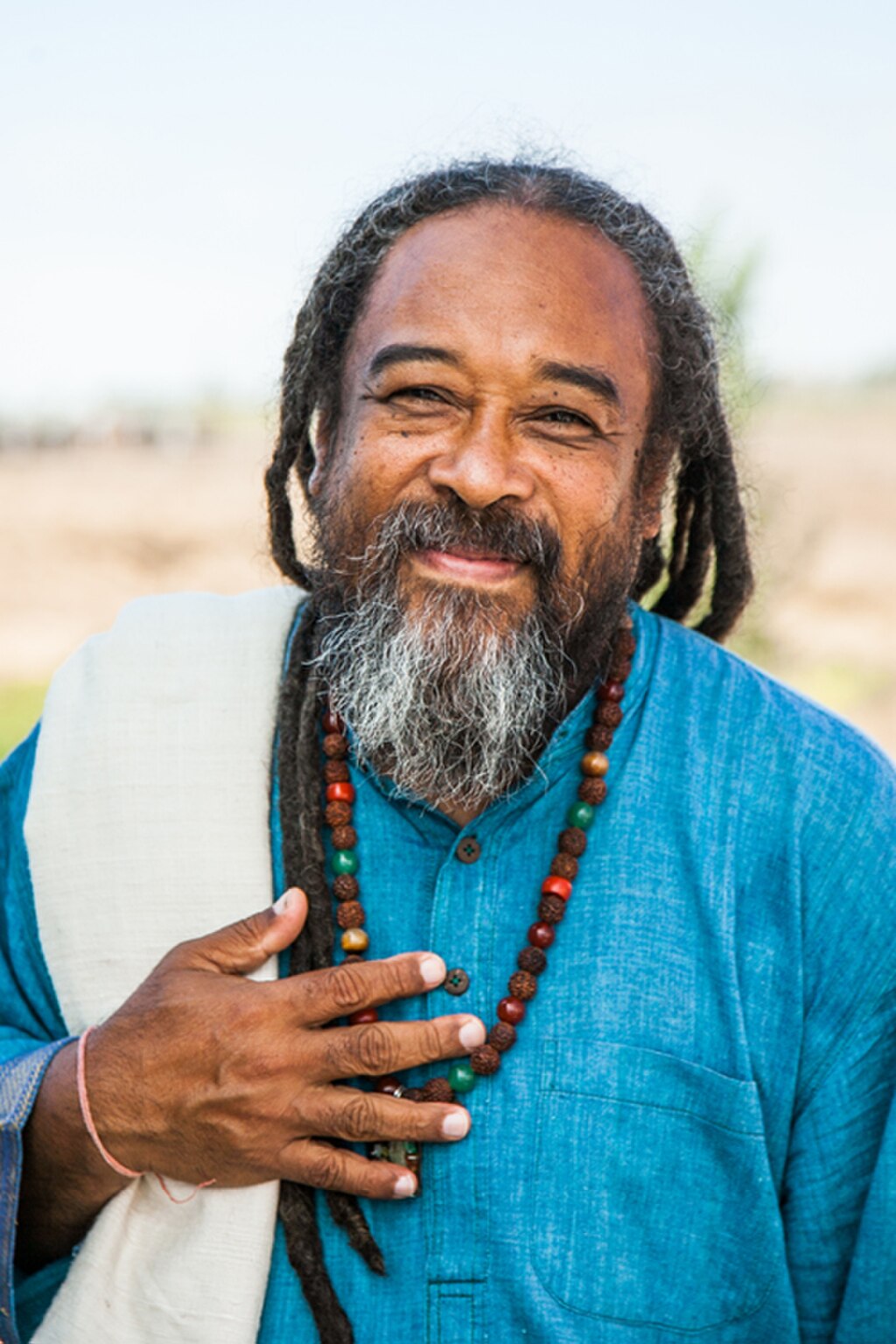
The Eternal Now: Embracing the Present Moment
Mooji's poignant assertion, "What time? There is only now," invites us to reconsider our relationship with time and existence. In a world often preoccupied with past regrets and future anxieties, this statement serves as a profound reminder of the significance of the present moment. It challenges us to awaken to the reality that our true essence is found not in the linear progression of time but in the immediacy of now. This realization is not merely philosophical; it has the power to transform our experience of life itself.
Delving deeper, Mooji's words resonate with the essence of non-dual awareness, where the separation between self and other, past and future, dissolves. This teaching implores us to recognize that the present moment is the only space in which life unfolds. By anchoring ourselves in now, we can access a deeper understanding of our being, transcending the limitations imposed by temporal thinking. The urgency of this message lies in its potential to liberate us from the shackles of time, allowing us to experience life in its fullest, most vibrant form.
The image / the metaphor
The imagery in Mooji's quote evokes a sense of immediacy and presence. The question "What time?" suggests a dismissal of the conventional markers that govern our lives—clocks, calendars, deadlines. The verb "is" in "there is only now" emphasizes existence in its purest form, stripping away the distractions of past and future. This stark contrast between the temporal and the eternal invites us to feel the weight of the moment, to recognize that every breath we take is a gift that exists solely in the now.
Going deeper into the metaphor, we can see that Mooji is not merely pointing to a chronological understanding of time but rather to a state of consciousness. The "now" is not just a fleeting moment; it is the gateway to our true essence. In this space, we can experience the fullness of life, unencumbered by the burdens of memory or anticipation. It is a call to awaken to the richness of our experience, to engage with life as it unfolds, and to recognize that the present moment is where all possibility resides.
In the speaker's tradition
Mooji's teaching is deeply rooted in the non-dual tradition, which emphasizes the interconnectedness of all existence. Concepts such as *sunyata* (emptiness) and *fana* (annihilation of the self) resonate with his assertion that the present moment is the only reality. In this framework, the illusion of time creates a false sense of separation, leading us to believe we are isolated beings moving through a linear timeline. By embracing the now, we dissolve this illusion and awaken to the truth of our shared existence.
In texts such as the *Upanishads* and the teachings of Advaita Vedanta, we find echoes of Mooji's message. The *Upanishads* speak of the eternal *Brahman*, the ultimate reality that transcends time and space. Similarly, the teachings of *prajna* (wisdom) encourage us to see beyond the dualistic nature of our thoughts and perceptions. By aligning ourselves with this wisdom, we can cultivate a deeper understanding of our true nature, which is inherently present and timeless.
Living the teaching
Consider a modern scenario where this teaching can be applied: a busy professional caught in the whirlwind of deadlines and responsibilities. Often, such individuals find themselves ruminating on past mistakes or worrying about future outcomes, which detracts from their ability to engage fully with their work and relationships. By embracing Mooji's teaching, they can practice mindfulness, redirecting their focus to the present moment. This shift allows them to experience their tasks with clarity and creativity, fostering a sense of fulfillment that transcends mere productivity.
In a different context, imagine a couple navigating a challenging moment in their relationship. Instead of dwelling on past grievances or fearing future conflicts, they can choose to engage with each other in the present. By practicing active listening and empathy, they create a space where love and understanding can flourish. This commitment to the now not only deepens their connection but also transforms their interactions into opportunities for growth and healing, illustrating the profound impact of living in the present.
A reflection
As we contemplate Mooji's assertion, we are invited to reflect on our own relationship with time. How often do we find ourselves lost in thoughts of what has been or what might be, neglecting the beauty of the present moment? In this light, consider this contemplative question: What would it feel like to fully inhabit the now, allowing each moment to unfold without judgment or expectation? This inquiry can serve as a guiding light, encouraging us to embrace the richness of our experience and to recognize that life is happening right here, right now.



Join the BrightStar Community
Stay connected with daily inspiration, event announcements, and community wisdom